
Peace, Pluralism And Conflict Transformation
- Home
- Peace, Pluralism And Conflict Transformation

What we Do
Peace, Pluralism and Conflict Transformation
Conflict in Pakistan takes many forms. It is present in sectarian tensions, ethnic divisions, resource-based disputes, political polarisation, and the lingering effects of militancy and displacement in communities that have lived through prolonged instability. It is also present in quieter, less visible ways, in the everyday exclusions, grievances, and broken relationships between communities, institutions, and the state that, left unaddressed, harden over time into deeper fractures. Religion, culture, the arts, and political life all sit at the heart of Pakistani society, and while they are frequently cited as sources of division or dismissed as secondary concerns in development work, they are equally, and perhaps more importantly, sources of shared values, creative expression, democratic participation, and community cohesion. IDRAC’s work in peace and conflict transformation takes all of these dimensions seriously
We approach conflict not simply as something to be managed or contained but as something to be understood and transformed. This means taking seriously the underlying causes of conflict, whether they are rooted in inequality, exclusion, historical grievance, competition over resources, religious difference, political rivalry, or the failure of institutions to respond to the needs of all communities equally. It also means recognising that religion, culture, artistic expression, and political engagement, when approached honestly and constructively, offer some of the most powerful resources available for peace building. Shared moral frameworks, traditions of hospitality and reconciliation, rich cultural and artistic heritage, and the democratic ideals that political life at its best embodies are not obstacles to peace. They are foundations for it.Political parties occupy a significant and often underappreciated place in peace and conflict dynamics. They shape public opinion, mobilise communities, and have the capacity to either inflame divisions or build consensus across them. In Pakistan, where political competition has at times deepened social fractures and where party loyalties frequently cut across ethnic, sectarian, and regional lines in complex ways, the role of political parties in either sustaining or transforming conflict cannot be ignored. IDRAC engages with political actors and party structures as part of its peace building work, not to favour any particular political position but to encourage a culture of democratic dialogue, tolerance, and responsible political behaviour that contributes to rather than undermines social cohesion.At the same time, we recognise that sustainable peace in diverse societies also requires a commitment to pluralism and the protection of space for different beliefs, identities, and ways of life to coexist. Secularization, understood not as the rejection of religion but as the principle that public institutions and civic spaces should be inclusive of all citizens regardless of faith or political affiliation, is an important part of that conversation. IDRAC engages with these questions carefully and without imposing a single view, recognising that how communities negotiate the relationship between religion, culture, political life, and public institutions is itself a deeply contested and important process.The arts occupy a special place in this work. Music, theatre, literature, storytelling, and visual art have historically been among the most effective means of crossing social boundaries, challenging prejudice, and creating the kind of empathy that makes dialogue possible. In Pakistan, a country with an extraordinarily rich artistic and cultural tradition, these forms of expression have long served as bridges between communities and as quiet forms of resistance against division and intolerance. IDRAC believes that art and culture deserve a more deliberate and sustained place in peace building work, and we try to bring that belief into our programming where we can.We work with communities, civil society organisations, local government bodies, political parties, religious leaders, scholars, artists, and cultural figures to build the understanding and skills needed to engage with conflict constructively and work towards more peaceful and cohesive social environments. Each of these actors brings something distinct to peace building work. Religious leaders carry moral authority. Artists and cultural figures open emotional and creative spaces that formal processes cannot always reach. Political parties, when genuinely committed to democratic norms, can translate peace building values into policy and public discourse. IDRAC actively seeks to involve and support all of them rather than treating any one constituency as more important than another.
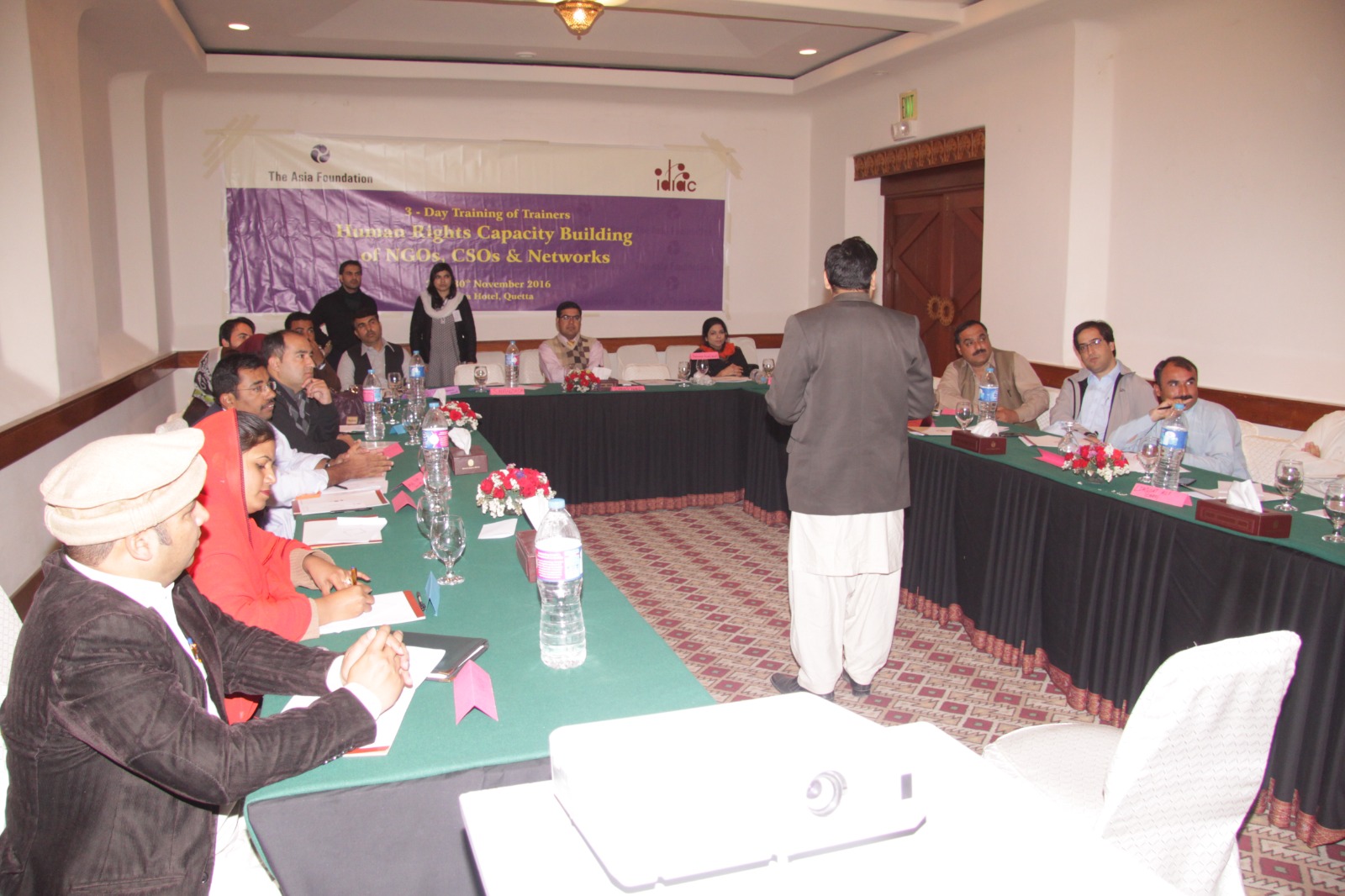
Our work in this area includes conflict analysis, dialogue facilitation, peace education, arts-based engagement, political party engagement, and the training of practitioners in mediation and conflict transformation approaches. We help organisations and institutions working in fragile or conflict-affected settings to understand the conflict dynamics around them, to design programmes that do not inadvertently exacerbate tensions, and to build relationships across divides that are too often reinforced rather than bridged by conventional development work.
We also pay close attention to the relationship between peace and other development outcomes. Communities living with unresolved conflict struggle to access education, health services, and economic opportunity. Women and children bear a disproportionate share of conflict’s costs. Minority communities, whether defined by religion, ethnicity, culture, or political belief, are frequently the first to be targeted when tensions rise. For IDRAC, peace building is therefore not a standalone concern but something that runs through and connects all of our thematic areas of work.
Pakistan has no shortage of people and communities who want to live in peace and are already working towards it in their own ways, drawing on their faith, their cultural traditions, their artistic heritage, their democratic aspirations, and their shared humanity. Our role is to support and strengthen those efforts, to help build the bridges, the skills, and the spaces for dialogue, creative expression, and democratic engagement that make peaceful transformation possible, and to stay engaged with that work over the long term rather than treating it as something that can be delivered and then departed from.